Cisco's SDWAN
A look into my experience as a UX Design intern at Cisco during the summer of 2023.
UI/UX Design
UX Research
Research & Insights
This project focused on improving the user experience of Cisco’s SD-WAN platform, specifically within vManage, the interface used for configuration and monitoring. Early research revealed a fragmented experience across Cisco products, largely due to inconsistencies between legacy and newer design systems. This lack of cohesion negatively impacted usability, scalability, and user confidence.
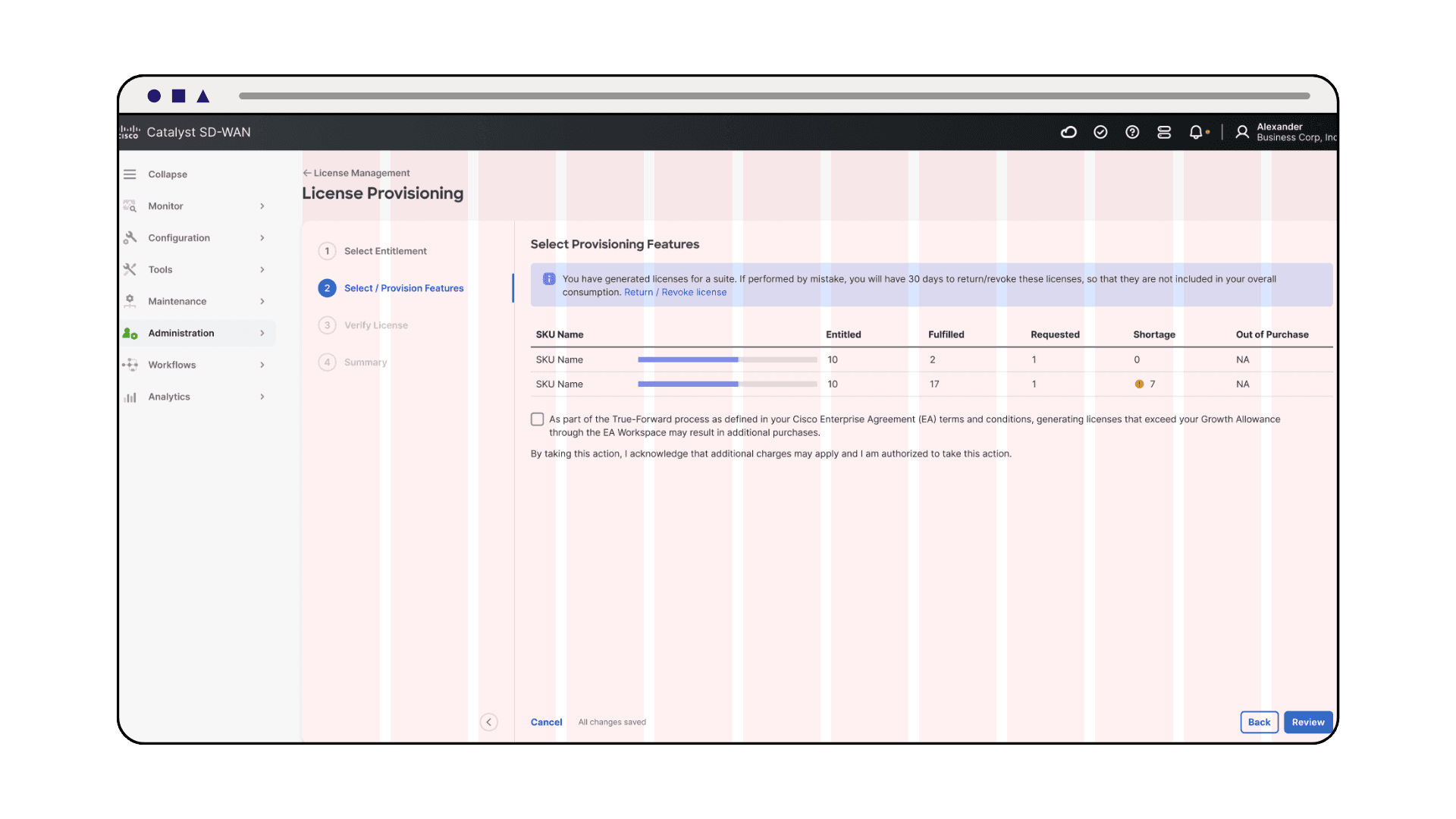
Customer feedback highlighted additional friction points, including unclear workflows and overly complex processes. In the license provisioning experience, users struggled with unnecessary steps, difficulty navigating to key actions, and a lack of clear direction throughout the flow.
These insights pointed to two core challenges: the need for a unified, scalable design system across the platform, and the need to simplify dense, multi-step workflows into more intuitive and accessible experiences.
Ideation and Concept
To address system-level inconsistencies, I evaluated existing Cisco design systems, including Cohesion and Momentum, and conducted interviews with teams who had adopted Magnetic, Cisco’s newer standard. Through cross-functional workshops and comparisons with industry standards, Magnetic emerged as the strongest solution due to its scalability and alignment with Cisco’s long-term UX vision.
For the license provisioning experience, I explored multiple interaction patterns, including dropdowns, multi-select components, and restructuring flows across separate pages. Through A/B testing and collaboration with design, product, and engineering teams, I focused on simplifying the experience into a clear, step-by-step process.
The final concept introduced a more guided flow, using numbered steps to visually separate tasks and reduce cognitive load. Supporting elements like banners and alerts were added to provide clarity and reinforce user progress throughout the process.
Prototyping and Testing
I developed prototypes implementing the Magnetic Design System within SD-WAN, creating a more consistent and scalable interface. These designs improved alignment between design and engineering, making implementation more seamless.
For the license provisioning flow, prototypes focused on reducing clutter and streamlining navigation. Testing validated that the new step-by-step structure improved clarity and usability, allowing users to move through the process more efficiently.
The redesigned experience reduced the number of steps by 40%, significantly improving task efficiency. A new direct launch mechanism also allowed users to initiate licensing flows twice as fast from within the interface. Throughout testing, close collaboration with engineering ensured that solutions were both user-centered and technically feasible, minimizing friction during development handoff.
Outcome
The implementation of the Magnetic Design System resulted in a more cohesive and scalable product experience, improving collaboration across teams and increasing overall usability. Post-launch evaluations showed higher usability scores and a reduction in support tickets related to UI confusion.
The redesigned license provisioning flow created a faster, more intuitive experience for users, directly addressing previous pain points around complexity and navigation. Both solutions were successfully taken into production, demonstrating measurable impact at an enterprise scale.
Next Steps
Cisco took both prototypes into production.