Simply Mindful
Partnering with UCSD's Center for Mindfulness to make mindfulness feel modern, credible, and accessible for everyday life
UI/UX Design
User Research

Research & Insights
We conducted interviews with mindfulness practitioners, newcomers, and stakeholders from the Center for Mindfulness to better understand how people perceive mindfulness, and what kind of biases or misconceptions they may have related to the practice. We then identified barriers related to practicing mindfulness, including personal bandwidth and cultural relevance in modern lives.
A look into our research…


Everyone we talked to had varying definitions of mindfulness that were all different and nuanced:
“Taking your mind off of the past and worries about the future, [and] focus on the present moment." - Dr. Nick Dumlua, Child Psychiatrist
“Emotions losing intensity when met with awareness.” - Cassandra Vieten, Director of the Center for Mindfulness
“The goal [of mindfulness] is not to strive for results...but to workshop consistency in developing good future habits.” - Katerina lewinbuk, JD “Mindful Lawyering”
Originally, we had 6 insights and narrowed down our scope and built our solutions based on these 3 insights:
Ideation & Concept
We translated our research insights into “How might we” questions and used them to guide concept generation. Through brainwriting, crazy eight’s, and clustering, we explored a wide range of ways mindfulness could feel more relatable, less intimidating, and easier to practice in daily life.


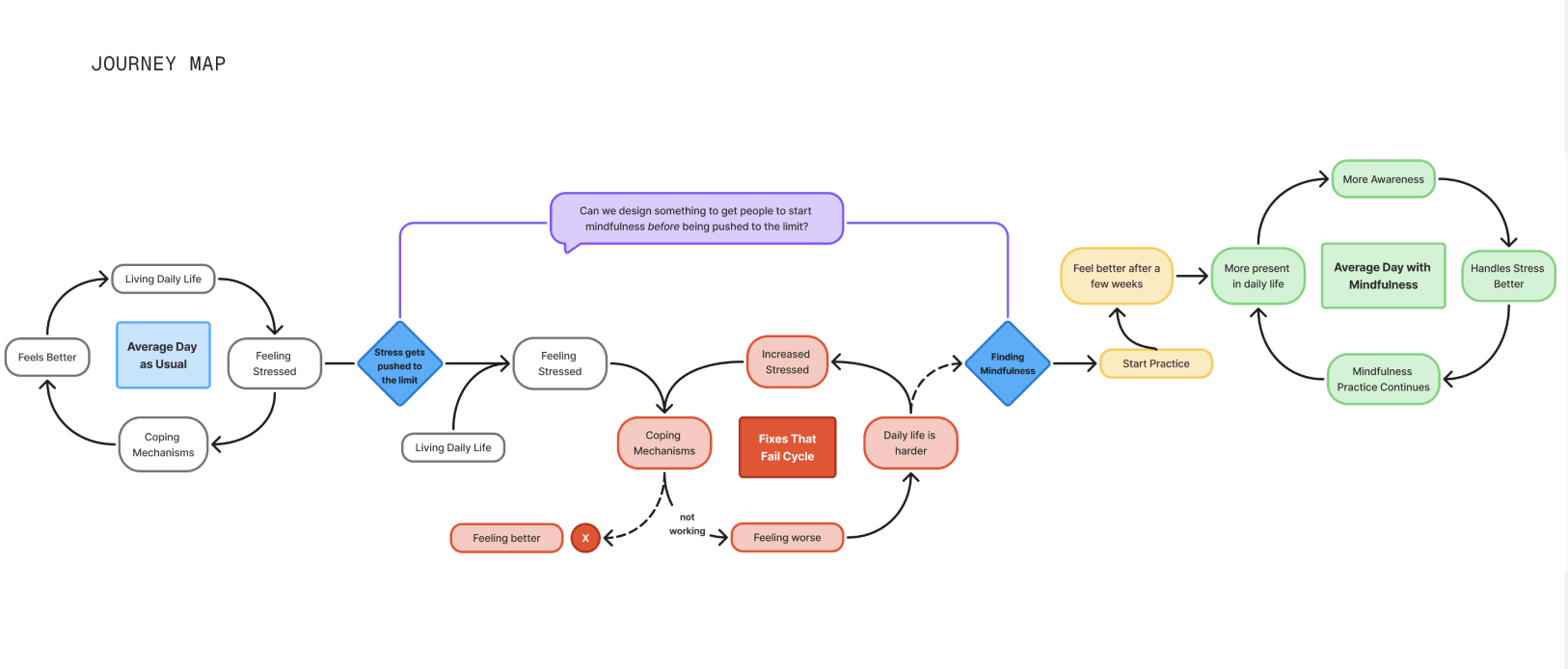
We then mapped the newcomer journey to understand where people drop off, from first interest to sustained practice. Keeping in mind the constraints of our concepts to be digital-first, lightweight for the CFM team to maintain, and scalable enough to support broader outreach over time, we then used that framework to narrow our concepts into a more cohesive system rather than a single solution.

Prototyping & Testing
We created and tested prototypes across the newcomer journey, gathering feedback from potential users and stakeholders.


Testing revealed that participants responded most positively to:
Personalized recommendations instead of open-ended choices
Experience-based language instead of mindfulness jargon
Short, achievable practices over longer commitments
Real-world representations of mindfulness rather than traditional meditation imagery
These findings helped refine both the messaging and functionality of our concepts.
Outcome
Our team delivered a suite of implementation-ready concepts that the Center for Mindfulness can continue building after the project.
Onboarding Quiz
A personalized onboarding quiz on UCSD's landing page to help users identify their needs and discover a mindfulness path that feels relevant to them.
Spotify Experience
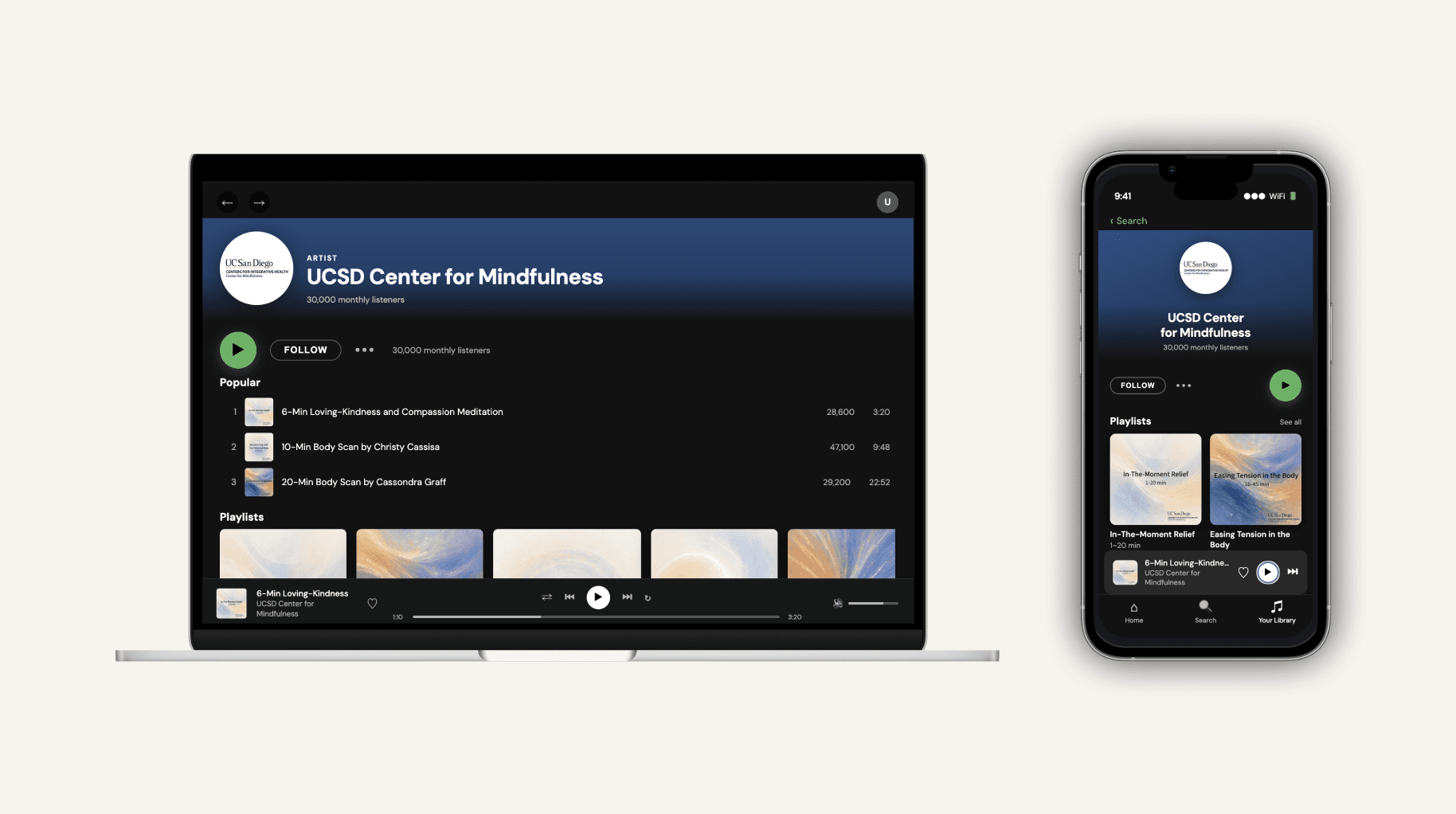
We migrated CFM's free content to Spotify and redesigned playlist titles around outcomes and experiences instead of meditation terminology.
Simply Mindful App
A high-fidelity mindfulness app prototype that encourages users to build consistency through short breathing exercises and daily nudges.
Awareness Campaign
A campaign featuring real people in everyday situations reframes mindfulness as something accessible to everyone, not just experienced practitioners.
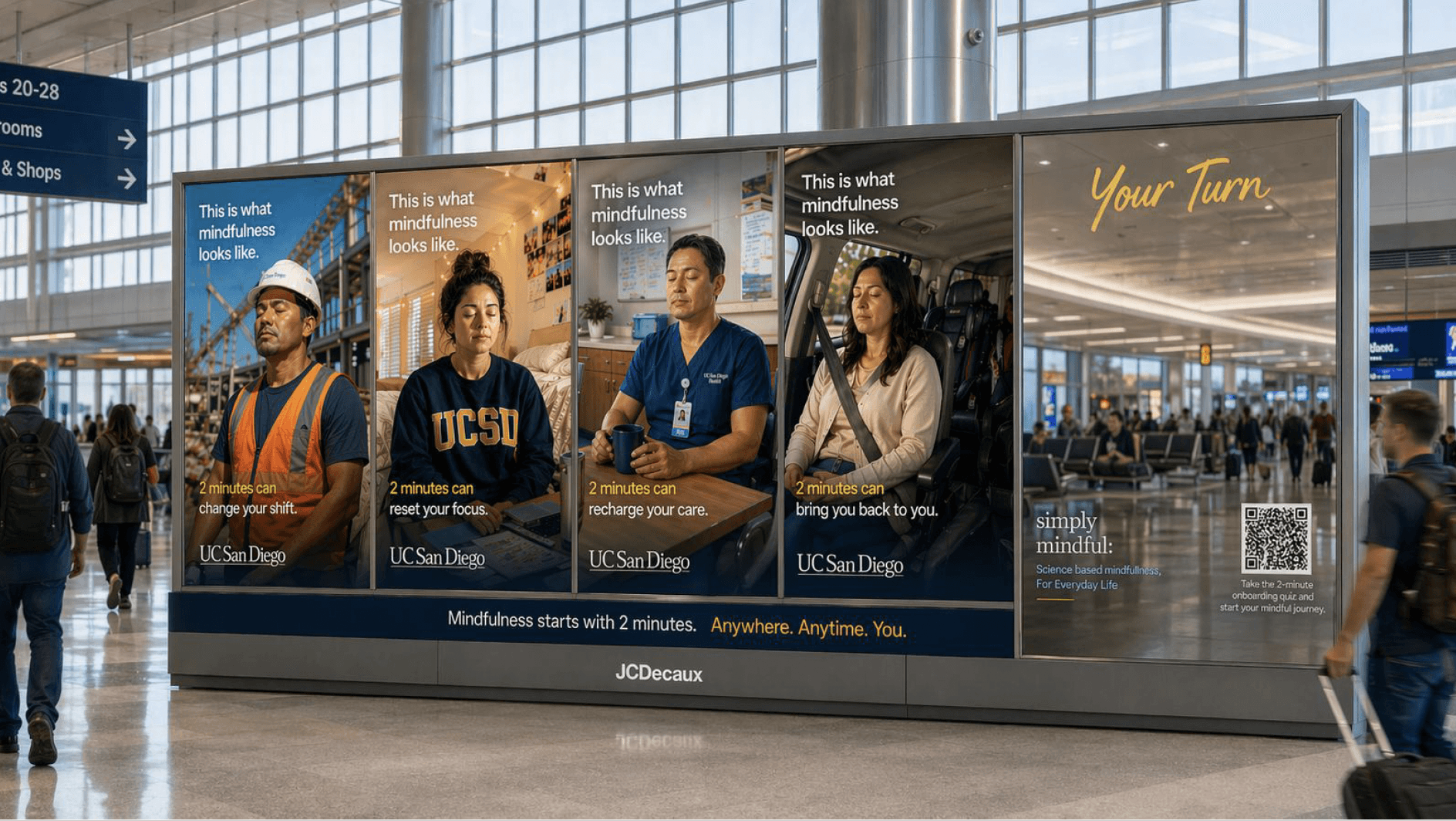
The response from stakeholders reinforced the value of reframing mindfulness around accessibility and everyday life.
"This is what we needed to bring us into this century." - Cassandra Vieten, Director of the Center for Mindfulness
Next Steps
The next phase of this work would focus on validating these concepts in the real world.
Future opportunities include measuring engagement with the Spotify content, piloting the onboarding quiz with new users, and developing the Simply Mindful app into a production-ready product that supports long-term habit formation.