Suites
A university-based roommate matching app, changing college experiences one roommate at a time.
UI/UX Design
UX Research
Research & Insights
As an expectant graduate, anxious on finding my place in a new grad world, I knew I wanted to explore the problem of learning to navigate life after their college lives in hopes of finding a new community, like finding a new roommate.
As I began to share my ideas with my classmates and peers however, I realized finding a roommate in college was a more pressing issue affecting the lives of my fellow current college students.
I wanted to scale down this idea to help students in our stage of life create their community in the university they live in by narrowing down the selection of choosing a college roommate.
I began to expand my research to potential users by interviewing fellow students about their roommate finding experience at our university when they first joined. I sent out user surveys and interviewed 28 of my classmates, underclassmen friends, and students attending other universities.
Ideation & Concept
During ideation, I explored multiple directions to address the key pain points. Rapid brainstorming exercises helped generate a wide range of concepts, including different matching systems, login methods, and interaction models.
I evaluated options such as traditional questionnaires versus swipe-based interactions, and different onboarding flows like standard email versus university-based authentication. Based on user needs and engagement goals, I formed the hypothesis that a swipe-based matching experience, similar to the mechanics of a dating app, would be more intuitive and engaging, especially when paired with a university login system to maintain trust and relevance.
Prototyping & Testing
I began with low-fidelity wireframes to explore structure and user flows, focusing on simplifying navigation and making profile information more accessible.
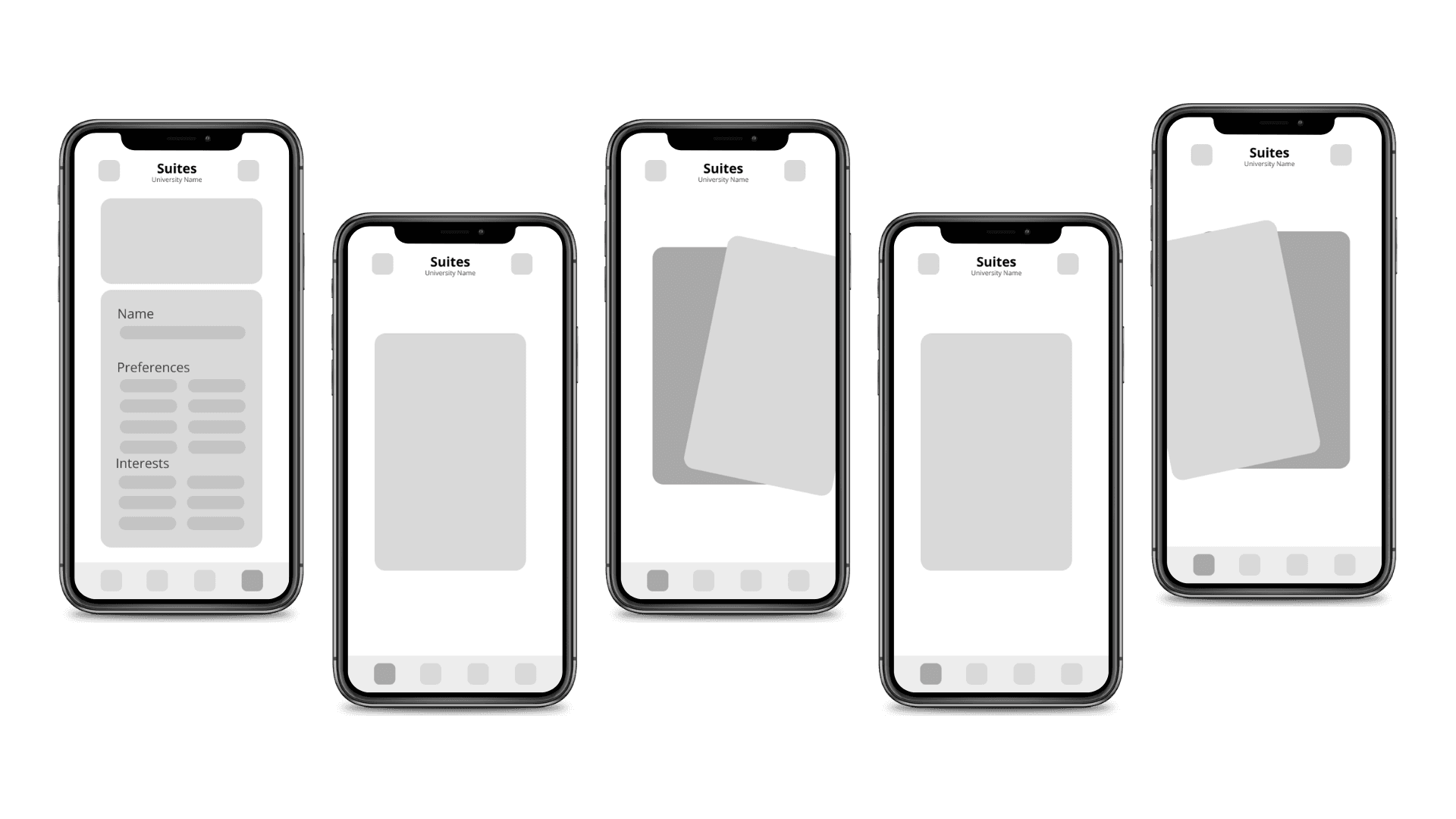
Swipe-based matching experience low-fidelity prototype
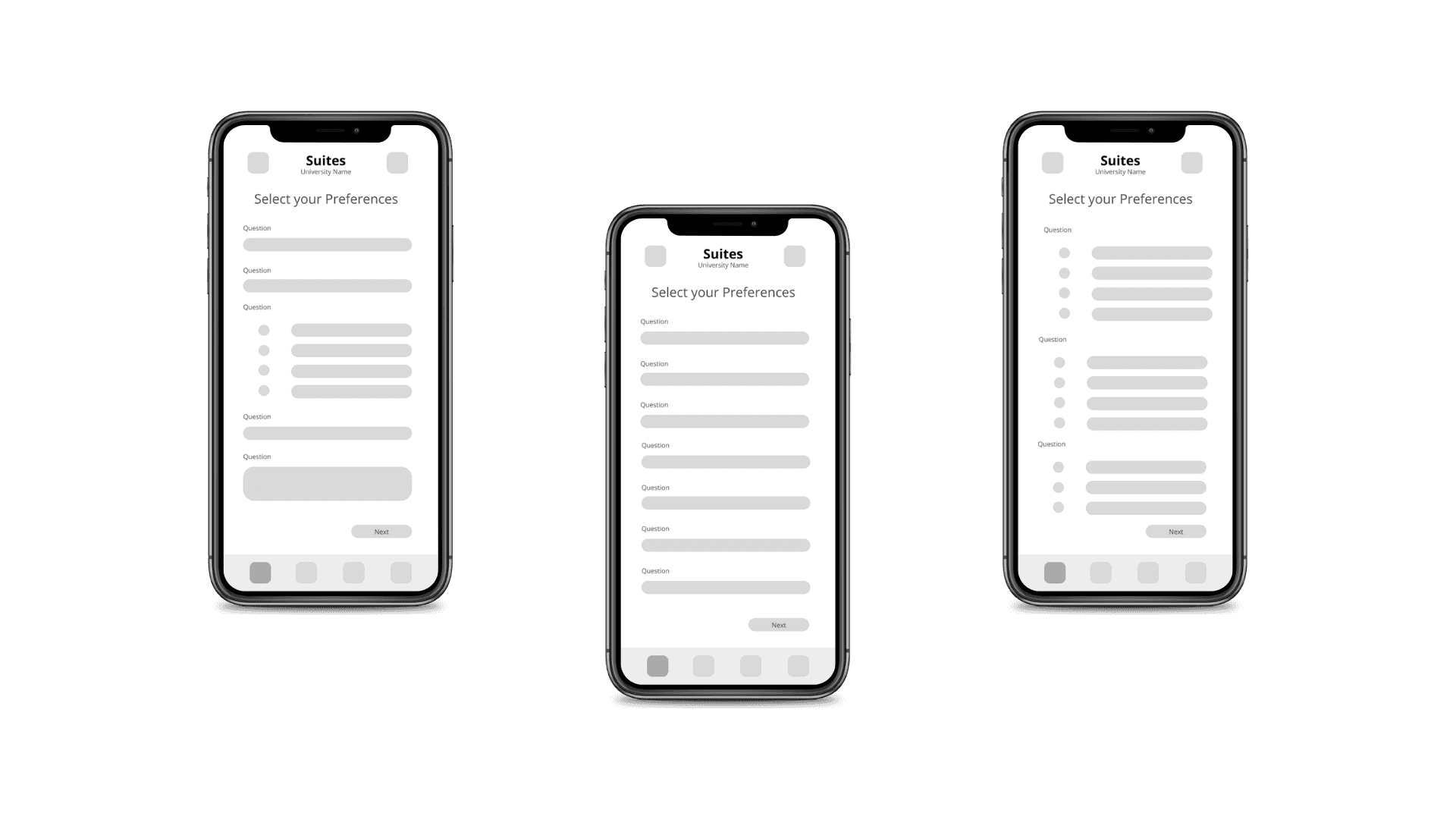
Questionnaire format low-fidelity prototype
User testing played a critical role in refining the experience. The swipe-based interface consistently outperformed traditional questionnaire formats in both engagement and completion rates during prototyping.
Introducing mutual interest tags increased users’ confidence in match quality, helping them make quicker and more informed decisions. Additionally, adding chat icebreaker prompts encouraged more active communication between matches and improved the overall first-time user experience.
These iterations helped transform the app into a more dynamic and socially engaging platform, directly addressing the initial pain points around low engagement and unclear matching criteria.
Outcome
From there, I iterated into high-fidelity prototypes that refined the visual design and interaction patterns.
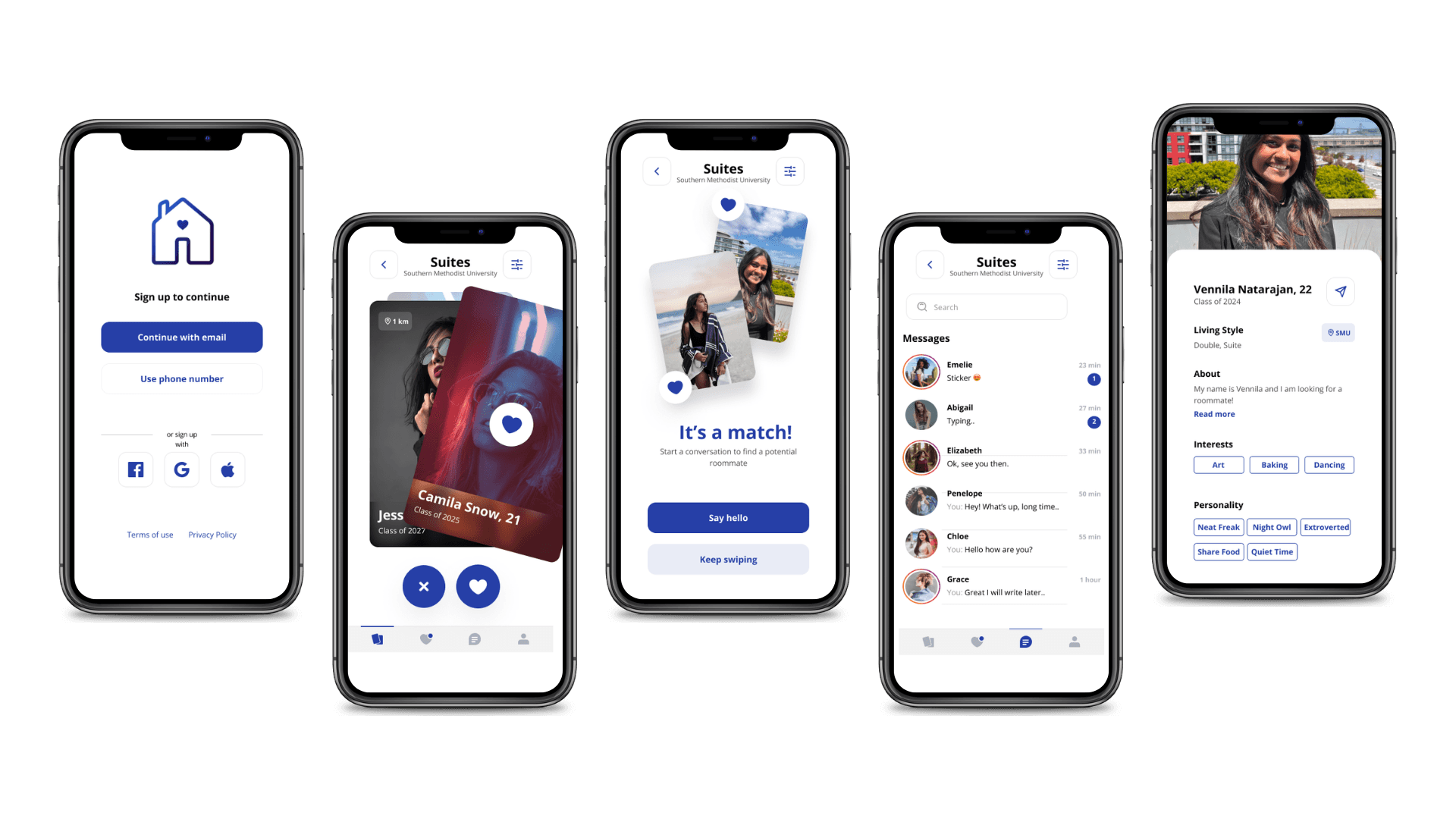
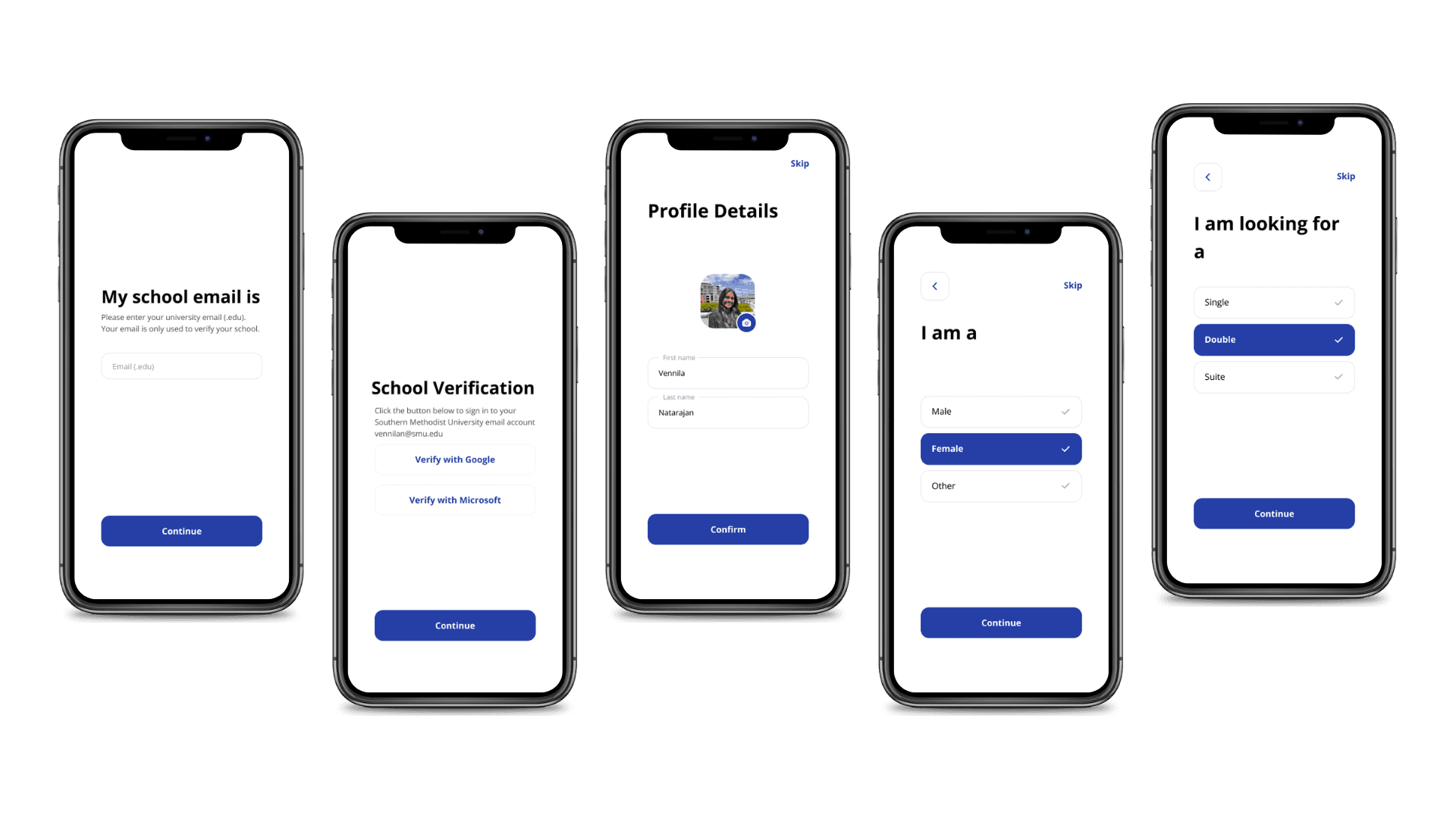
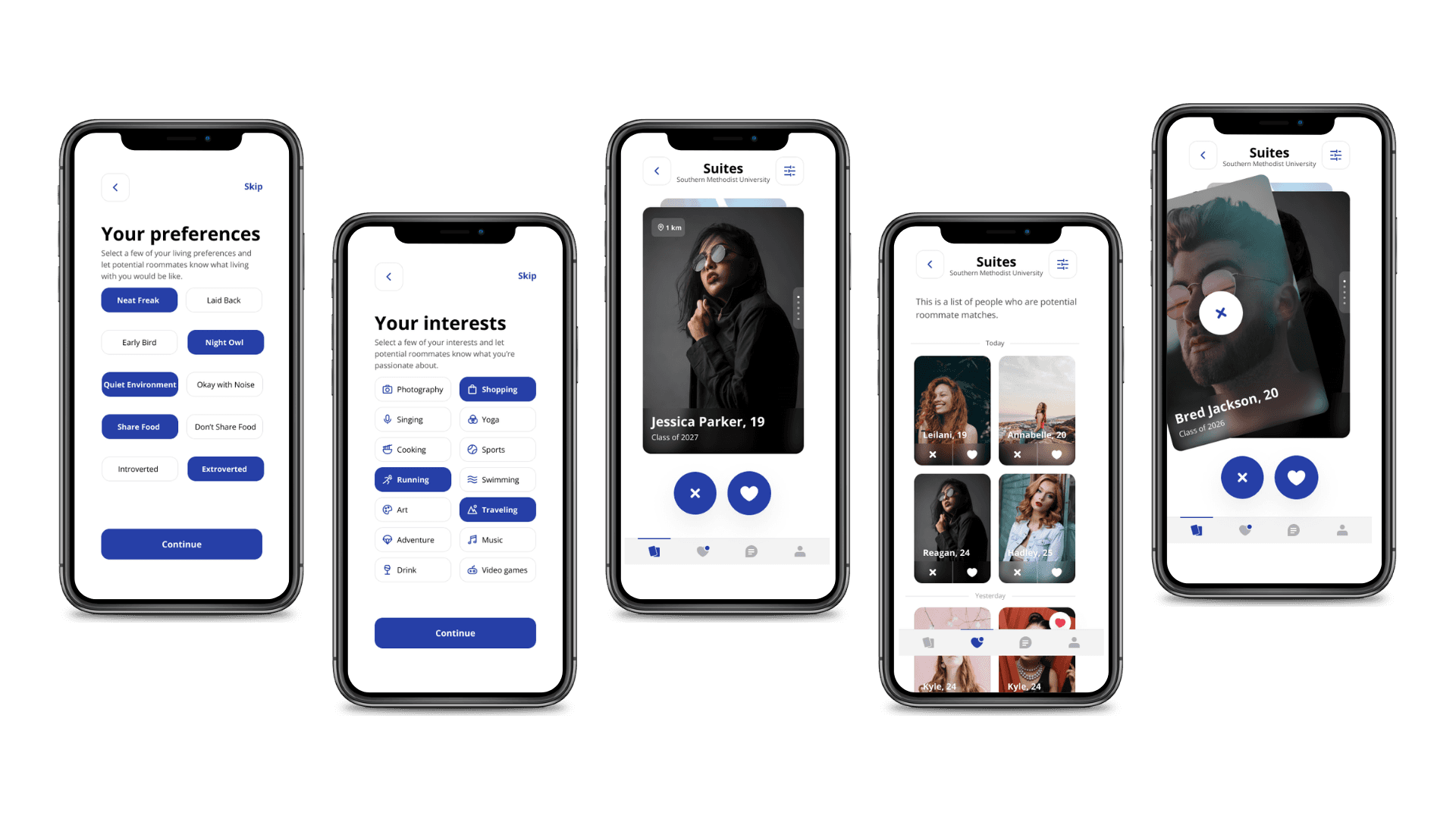
High-fidelity prototypes
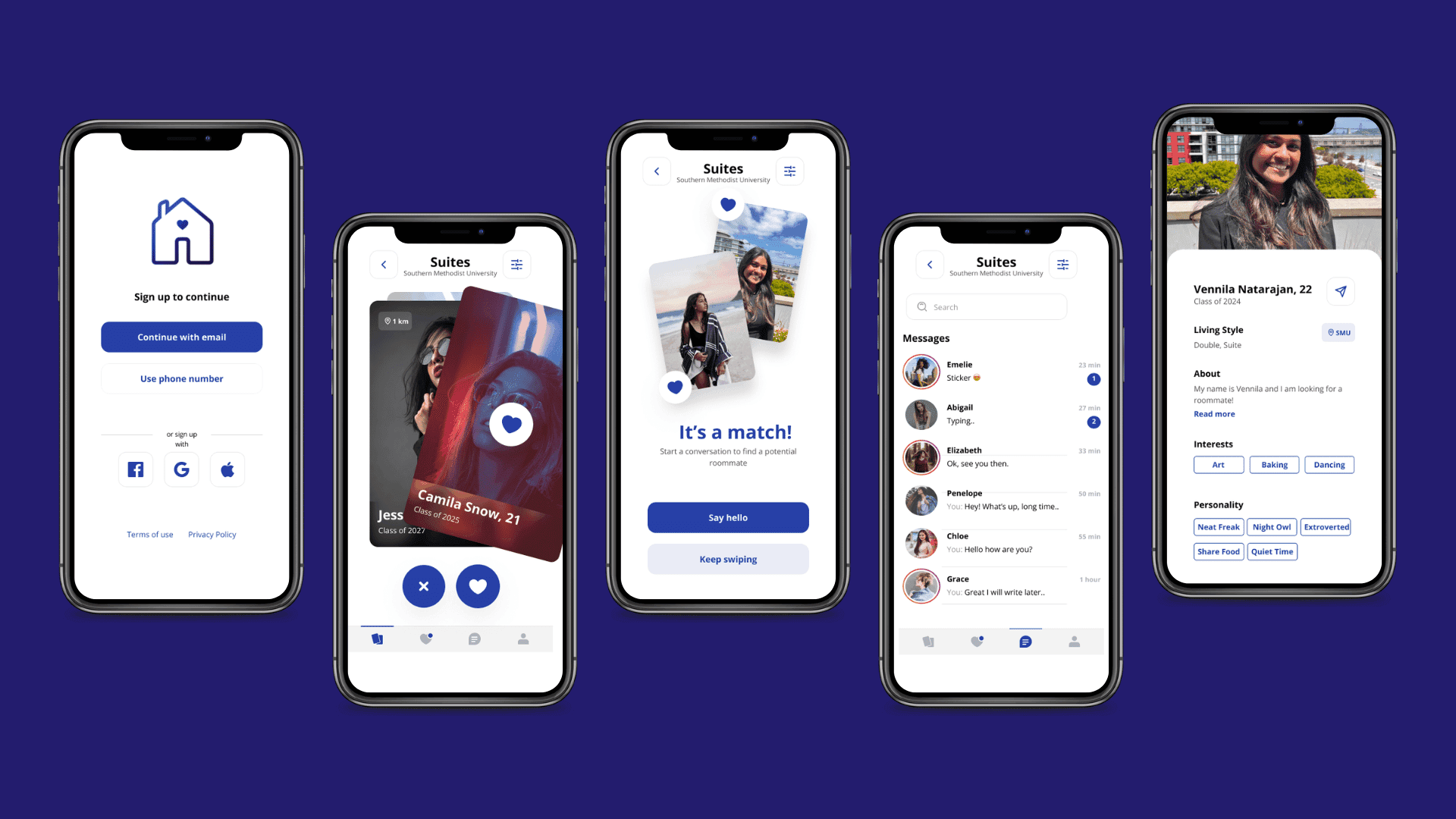
A key feature of the final design was the swipe-based interface, allowing users to quickly browse and match with potential roommates. Profiles included mutual interest tags to help users immediately identify compatibility, and the interface was designed to feel lightweight, modern, and easy to use.
To push the project beyond design, I developed the app using SwiftUI, turning the concept into a functional MVP. This step allowed me to better understand the relationship between design and implementation, and ensured that the experience was grounded in real-world constraints and feasibility.
Check out my MVP here!
Reflection
Suites was a deeply rewarding project because I led every stage of the process, from initial concept to a coded product. It was my first experience fully owning a product end-to-end, which strengthened my ability to make decisions independently while still grounding them in user research.
One of the most valuable takeaways was learning to trust my intuition during ideation while balancing it with user insights. I also gained hands-on experience translating wireframes into a working application, which challenged me to think more critically about interaction design and technical feasibility.
Overall, this project reinforced how powerful design can be when paired with functionality, and it inspired me to continue building thoughtful solutions that directly serve real communities.
Next Steps
Moving forward, I would continue refining and expanding prototypes in Figma while translating key designs into the SwiftUI codebase to strengthen the app’s functionality.
I would also prioritize ongoing usability testing to gather feedback and iterate on the experience. Additionally, I would explore collaborating with my university to test Suites with real users, enabling stronger validation and insights in a live campus setting.